Ghana VAT: The New 20% Rate and How to Calculate It
GRA's VAT reform took effect 1 January 2026: NHIL and GETFund stopped stacking on VAT, cutting the real rate from 21.9% to 20%. Here's who must register now.

In this guide▾
If you sell or buy in Ghana, VAT just got a bit simpler and cheaper. Since 1 January 2026, the total VAT on most sales is 20%, down from about 21.9% under the old system.
That's because the levies are no longer stacked on top of each other. On a GH₵1,000 sale, the customer now pays GH₵200 in tax instead of about GH₵219. If you sell goods, you also only have to register for VAT once your sales pass GH₵750,000 a year.
Here's how to work out VAT the new way, with GRA's own example, and who has to register. The new rates come from the Ghana Revenue Authority, and the old 21.9% comparison from the Ghana News Agency.
Quick facts: old VAT system vs new
| Old system (before 1 Jan 2026) | New system (from 1 Jan 2026) | |
|---|---|---|
| Headline / effective rate | About 21.9% | 20% flat |
| How it's charged | NHIL, GETFund and the COVID-19 levy added first, then VAT charged on top of that total (cascading) | VAT (15%), NHIL (2.5%) and GETFund (2.5%) each calculated on the same selling price |
| COVID-19 Health Recovery Levy | 1% | Abolished |
| VAT flat rate scheme (3% retail, 5% immovable property) | Available | Abolished |
| VAT registration threshold: goods businesses | GH₵200,000 a year | GH₵750,000 a year |
| VAT registration threshold: services businesses | None | Still none |
Source: GRA, "New VAT rate" and Ghana News Agency, 11 February 2026.
What changed under Act 1151?
Before 2026, Ghana charged VAT on a price that already included the NHIL, GETFund and COVID-19 levies, so you paid tax on tax. GRA's own example shows what that meant on a GH₵1,000 item: NHIL (GH₵25) + GETFund (GH₵25) + COVID-19 levy (GH₵10) took the taxable value to GH₵1,060, then 15% VAT on that (GH₵159) made the total GH₵1,219.
From 1 January 2026, each levy is calculated on the original GH₵1,000 selling price instead: NHIL (GH₵25) + GETFund (GH₵25) + VAT (GH₵150) = GH₵1,200. Same item, GH₵19 cheaper, and GRA's own page states plainly that this "indicat[es] a reduction in price." The VAT flat rate schemes that let some retailers and property sellers pay a flat 3% or 5% instead have also been scrapped, so those businesses now use the standard calculation too.
How to calculate VAT in Ghana now
The maths is simpler than before. On any VAT-able selling price, add:
- 15% VAT
- 2.5% NHIL (National Health Insurance Levy)
- 2.5% GETFund Levy
All three are worked out on the same selling price and added together, so the shortcut is simply selling price × 1.20.
| Selling price | VAT (15%) | NHIL (2.5%) | GETFund (2.5%) | Total price |
|---|---|---|---|---|
| GH₵1,000 | GH₵150 | GH₵25 | GH₵25 | GH₵1,200 |
| GH₵2,500 | GH₵375 | GH₵62.50 | GH₵62.50 | GH₵3,000 |
| GH₵5,000 | GH₵750 | GH₵125 | GH₵125 | GH₵6,000 |
Say you're pricing a fridge at GH₵2,500 before tax. Multiply by 1.20 and the shelf price is GH₵3,000, not the roughly GH₵3,048 it would have been under last year's tax-on-tax formula. If you're working out your own take-home pay rather than a sale price, that's a different tax: use our Ghana PAYE calculator for that.
Who has to register for VAT in Ghana now?
- If you sell goods: you must register once your yearly turnover passes GH₵750,000, up from GH₵200,000. Below that, you don't have to deal with VAT. GRA says the aim is to keep micro and small traders out of the system.
- If you sell services: there's no threshold at all. As Dr Dominic Naab, Acting Head of GRA's Strategy and Research Department, told Citi Newsroom, "the GH¢750,000 threshold is only applicable to the supply of goods.. For the supply of services, there is no threshold." If you invoice for services (consulting, design, repairs, professional work) you're legally required to register regardless of how little you earn.
To register, you need a TIN linked to your Ghana Card (see our guide on checking or getting a Ghana TIN). If you trade as a company or under a business name, you'll usually have registered with the ORC first. Our guide to registering a business in Ghana covers that process and its costs.
VAT mistakes to avoid
- Old invoices still showing 21.9% or separate stacked levies. GRA's Commissioner-General, Anthony Sarpong, has told taxpayers to update their invoicing systems and Fiscal Electronic Devices (FEDs) to show the new 20% rate. If a supplier hands you a receipt still breaking out the old COVID-19 levy or using last year's formula, it hasn't been updated.
- Assuming the GH₵750,000 threshold applies to everyone. It only applies if you sell goods. Many service businesses wrongly think they're exempt because they're small. The law doesn't give them that pass.
- Confusing "20% VAT" with a single tax. It's three separate charges (VAT, NHIL and GETFund) that happen to add up to 20% on the same base. They're reported and remitted differently even though the customer just sees one combined price.
- Still using the old flat rate. If you were on the old 3% VAT flat rate scheme, it no longer exists. Check with GRA or your accountant about moving to the standard method before your next filing.
If you run a business and this is the first new tax rule you've had to apply, read our SSNIT contributions guide and PAYE guide too. VAT, SSNIT and PAYE are the three that catch most new Ghanaian business owners out.
Frequently asked questions
What is the VAT rate in Ghana?
A combined 20%: 15% standard VAT, 2.5% NHIL and 2.5% GETFund Levy, all calculated on the same selling price. This took effect on 1 January 2026 under the VAT Act, 2025 (Act 1151).
Is the new Ghana VAT rate higher or lower than before?
Lower, in real terms. The headline rate looks similar, but the old system charged VAT on a price that already included NHIL, GETFund and a 1% COVID-19 levy, pushing the real cost to about 21.9%. The new system removes that stacking, so the same GH₵1,000 item that cost GH₵1,219 now costs GH₵1,200.
Who has to register for VAT in Ghana now?
Goods businesses once their annual turnover passes GH₵750,000 (up from GH₵200,000). Services businesses have no threshold at all and must register no matter how small their turnover is. If you are still choosing what kind of business to start, our guide to low-capital businesses to start in Ghana flags which of these carry VAT obligations from day one.
What happened to the COVID-19 Health Recovery Levy?
It's been abolished entirely as part of the same reform, along with the old VAT flat rate schemes for retailers (3%) and immovable property sellers (5%).
How do I work out VAT on a price myself?
Multiply the price before tax by 1.20. That single multiplier covers the 15% VAT, 2.5% NHIL and 2.5% GETFund together, since all three now apply to the same base price.
Do I need a TIN to register for VAT in Ghana?
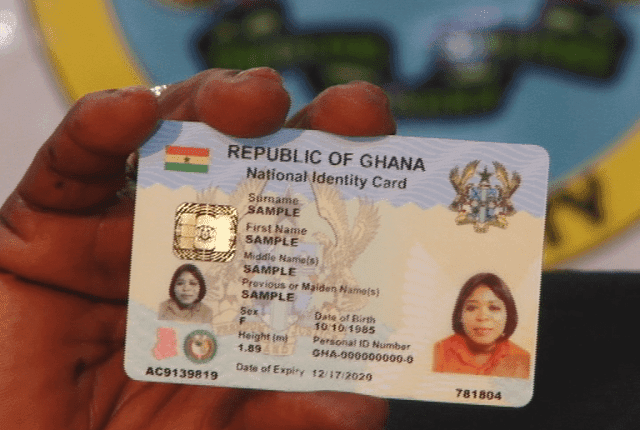
Yes. For individuals, your Ghana Card PIN acts as your TIN; registered companies get a separate GRA-issued TIN, as covered in our TIN guide above.
Keep reading

SSNIT Contributions in Ghana: How Much Is Deducted, How to Check Your Balance and Claim
SSNIT takes 18.5% of your basic salary in Ghana: 5.5% from you, 13% from your employer. Rates confirmed November 2026, plus how to claim your pension.
7 Oct 2026 · 10 min read

PAYE in Ghana: Tax Bands, SSNIT and What You Take Home
How to calculate PAYE in Ghana for 2026: the GRA's tax bands, the 5.5% SSNIT deduction, and real take-home pay examples in GH₵, checked October 2026.
4 Oct 2026 · 8 min read
How to Check Your TIN Number in Ghana
Your TIN in Ghana is the PIN on your Ghana Card, official since April 2021. How to check it fast, verify it online with GRA, and link an old TIN, October 2026.
28 Sept 2026 · 6 min read