How to Start a Mitumba Business in Kenya (Step-by-Step)
Start a mitumba business in Kenya by hand-picking or buying bales: current bale prices, where to buy, how to grade and price, and what one bale can earn.

In this guide▾
Plenty of mitumba sellers in Kenya started with just a few thousand shillings. The business is cheap to start and stock sells fast, but the money is made or lost on how well you buy and grade your bales.
You can start small by hand-picking (kuchagua) single items for KSh 1,000–10,000, or go bigger with whole bales. This guide walks through both, with real bale prices, a worked example and the risks to plan for, whether you sell from a stall, on TikTok or in your estate. Prices checked in November 2026.
| Kuchagua (pick and sell) | Buying whole bales | |
|---|---|---|
| Starting money | About KSh 1,000–10,000 | About KES 12,000–32,500 per bale, plus transport and a stall |
| What you get | Hand-picked pieces you've seen | A sealed bale: good pieces and rejects together |
| Margin | Lower per piece, little risk | Higher if you grade well, losses if you don't |
| Best for | Testing demand, selling online | Stall owners and sellers with steady buyers |
How much does it cost to start a mitumba business in Kenya?
You can start a mitumba business in Kenya with a few thousand shillings by hand-picking pieces to resell, or with about KES 12,000–32,500 for a single bale, plus transport, a stall and basic supplies. Bale prices depend mostly on the category and grade.
A Nairobi wholesaler's current list (mitumbabales.com) gives a feel for the range:
| Bale type | Price per bale |
|---|---|
| Mixed adult fleece | About KES 12,000 |
| Children's cotton | KES 19,000–32,500 |
| Mixed shoes | About KES 26,500 |
Prices move with the shilling and the season, and usually rise before December, when demand for clothes peaks. Always ask what's in the bale, its grade and roughly how many pieces it holds.
On top of the bale, budget for:
- Transport from the supplier to your stall or home
- Stall rent, usually paid by the day, week or month in markets
- Washing, steaming and minor repairs for the better pieces
- Hangers, a table or rack, bags and price tags
- Data and a little advertising if you sell on WhatsApp, Instagram or TikTok
Where to buy mitumba bales
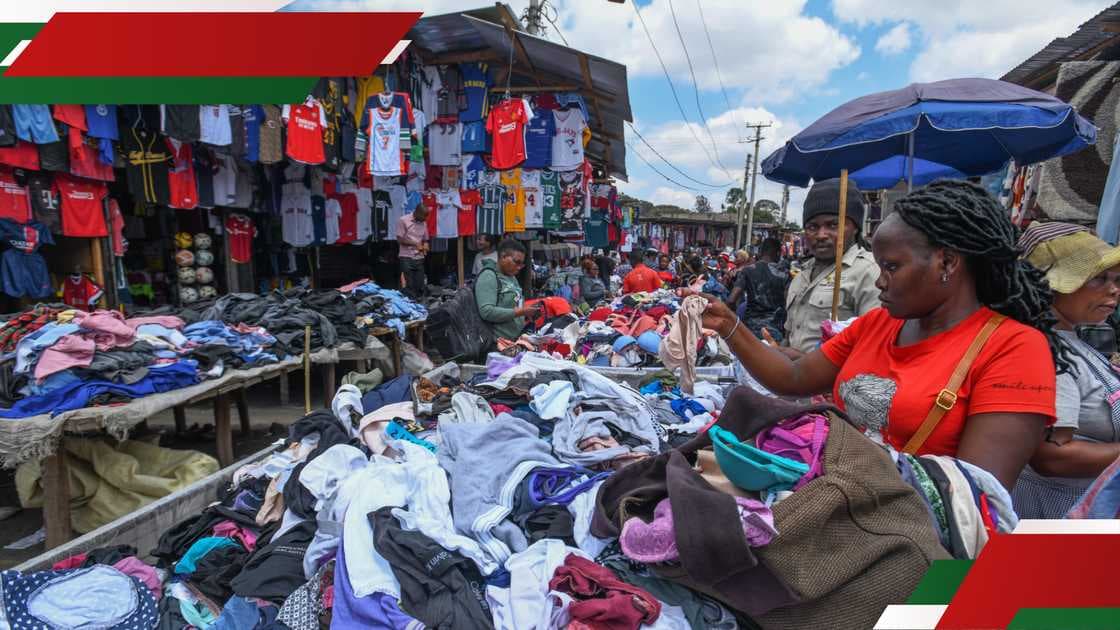
- Gikomba in Nairobi is the best-known mitumba market in Kenya, with bales and picked lots.
- Toi Market near Kibera and Kongowea in Mombasa are the other major hubs.
- Wholesalers and importers sell bales from warehouses and online, with grades and prices listed.
Importing your own containers isn't a beginner's move. It needs a licensed customs clearing agent, import paperwork and KEBS compliance, and clearing a single container costs a lot before you've sold a thing. Buy locally until you know your market well.
How to start, step by step
- Walk the markets first. Spend a day in Gikomba or your nearest market. Note what sells fast, at what price, and who's buying: students, office workers, parents, boda boda riders.
- Pick a niche. Kids' clothes, jackets, shoes, sheets or branded "camera" pieces each have their own buyers. Start with two or three categories you understand.
- Start small. Hand-pick pieces or buy one bale. Learn how many sellable items you get before you buy more.
- Sort the moment you open a bale. Split it into top pieces, everyday sellers, repairs and rejects. Wash or steam the best items.
- Price by piece and category. Everyday items and branded finds sell at very different prices. Offer bundles for slower stock.
- Sell in more than one place. A stall plus WhatsApp status, Instagram or TikTok Live reaches more buyers than either alone.
- Keep records. For each bale, write down what you paid, how many pieces you sold and for how much. That's how you learn which suppliers and categories pay.
How much can you make per bale?
Here's a simple way to check a bale before you buy.
Say you pay KES 20,000 for a bale of about 120 pieces. If around 100 are sellable at an average of KES 300, you take in about KES 30,000. Take off transport, stall rent and supplies, and what's left is your profit for that bale. If only 60 pieces are good, or you have to drop prices to clear them, the same bale barely breaks even.
That's the whole business in one sum: cost per bale, sellable pieces, average price. Get those three right and mitumba pays. Get them wrong and you're working for free. A KES 20,000 bale of 100–150 items needs most pieces to sell for KES 200–400 just to break even.
Risks to plan for
- Bad bales. Not every bale has many good pieces, and you rarely see inside before you pay. Build trust with one or two suppliers.
- Slow stock. Clothes that don't sell tie up your money. Discount early and bundle slow pieces.
- Policy changes. Proposals to restrict mitumba imports come up from time to time in Kenya, and any change could push bale prices up.
- Hygiene worries. Some buyers are wary of second-hand clothes. Washed, pressed and well-photographed stock sells faster and for more.
- Tax. Income from reselling counts as business income. If you're employed, declare it in your annual return on iTax.
If you're doing this at weekends alongside a job, our guide to weekend side hustles for employed Kenyans compares mitumba with freelancing, driving and Airbnb. For a bigger shop later, see what opening a mini-supermarket costs.
Frequently asked questions
Can I start a mitumba business with KSh 1,000?
Yes. With kuchagua, you hand-pick single items or small bundles and resell them on WhatsApp, TikTok or at a stall. It's slow, but the risk is low and you learn what sells before buying a bale.
How much is a mitumba bale in Kenya?
Prices depend on the category and grade. A Nairobi wholesaler lists mixed adult fleece at about KES 12,000, children's cotton at KES 19,000–32,500 and mixed shoes at about KES 26,500 per bale.
Where is the best place to buy mitumba in Kenya?
Gikomba in Nairobi is the best-known market. Toi near Kibera and Kongowea in Mombasa are the other major hubs, and some wholesalers sell bales online.
Is importing mitumba containers worth it for beginners?
Usually not. Importing needs a clearing agent, import paperwork, KEBS compliance and a lot of capital. Learn the trade by buying bales locally first.
How do I increase profit on mitumba?
Grade carefully, sell top pieces online where they fetch more, clean and press better items, and focus on fast-moving categories such as children's clothes. Track every bale so you know which suppliers are worth going back to.
Keep reading
Pig Feed Formulation in Kenya: Creep, Weaner, Grower and Finisher Feed
What goes into balanced pig feed at every stage (creep, weaner, grower, finisher and sows) from Kenyan ingredients, what pigs need at each stage, how much they eat, and whether home mixing pays.
20 Oct 2026 · 4 min read
How to Make Dairy Meal at Home in Kenya: 16% Mix and Feeding Guide
How to make dairy meal at home: the ingredients for a balanced 16% mix and a high-yielder version, the standards from KALRO and ILRI, and how much to feed per litre of milk.
20 Oct 2026 · 4 min read
Kienyeji Chicken Feed Formulation: A Guide for Growers and Layers
What goes into balanced feed for improved kienyeji chickens (growers and layers) from Kenyan ingredients, the protein they need according to Kenyan research, and how much to feed free-range birds.
20 Oct 2026 · 4 min read