Poultry Farming Business Plan in Kenya: Layers or Broilers?
Plan a poultry farm in Kenya: layers vs broilers, how startup money splits, the steps from buyers to records, and the risks that cost farmers money.

In this guide▾
Kenyans eat eggs and chicken every day, in every income group, which is why poultry is the first business many people think of. It can pay, but feed prices and disease decide whether your flock makes money or loses it.
Broilers are ready for sale in 5–7 weeks and layers start laying at about 18–20 weeks, so you see returns faster than with most farming. This guide covers how to choose between them, what goes into a good chicken house, where the startup money goes and the risks to plan for.
| Layers (eggs) | Broilers (meat) | |
|---|---|---|
| Time to first income | About 18–20 weeks | 5–7 weeks |
| Income pattern | Daily eggs for over a year | One sale per batch |
| Upfront burden | Months of feed before the first egg | Chicks and feed for each batch |
| Main risk | Egg price swings and disease | Selling on time at a fair price |
Layers or broilers: which should you start with?
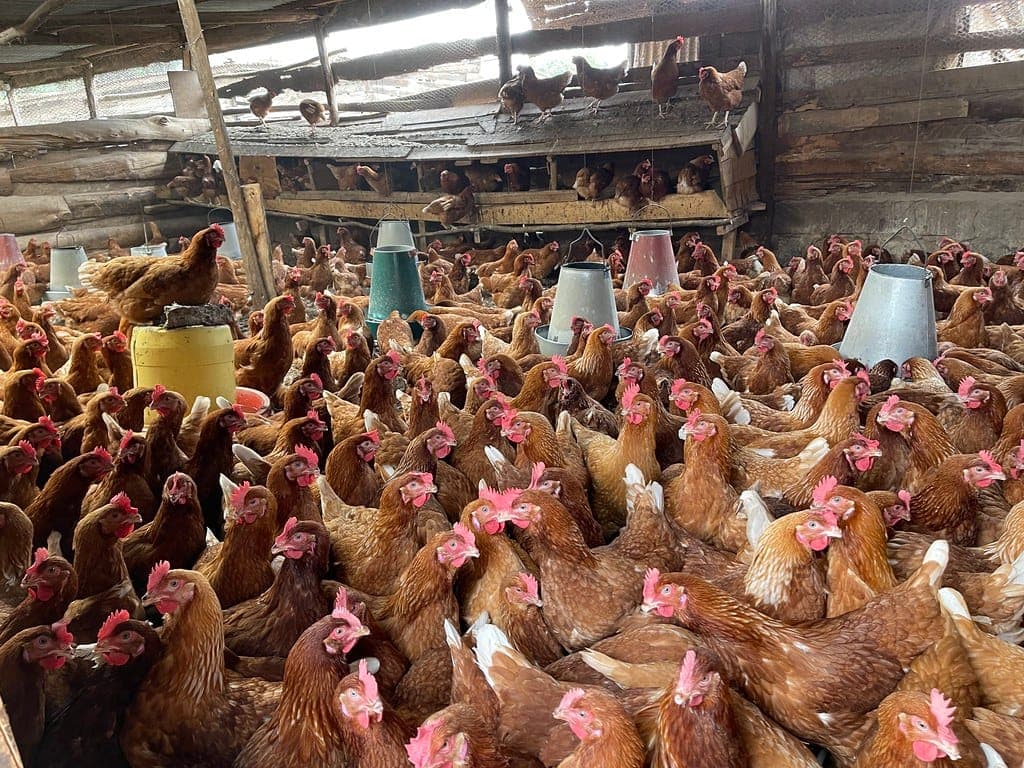
Choose layers if you want steady daily income and can afford to feed hens for four to five months before they lay. Choose broilers if you want money back quickly and have buyers lined up for each batch. Many Kenyan farmers start with one, learn it well, then add the other.
Layers give you something to sell every day once they start, usually from about 18–20 weeks old. The catch is the wait: every bag of feed before the first egg is paid from your own pocket.
Broilers reach selling weight in 5–7 weeks, so your money turns over fast. But each batch has to be sold on time. A broiler kept past its best weight keeps eating without adding much value.
Improved kienyeji breeds sit in between: hardier than commercial birds and popular with buyers who pay more for "kienyeji" eggs and meat, but slower to grow. Our guide to kienyeji chicken feed covers what they need.
How to start a poultry farm in Kenya, step by step
- Find your buyers first. Talk to shops, hotels, schools and neighbours. Ask what they buy, how often and what they pay. A farm with no buyers is an expensive hobby.
- Register the business. Register a business name on eCitizen for KES 950 (our business name guide has the steps) and get a Single Business Permit from your county.
- Build or adapt the chicken house. Good ventilation, a dry floor, protection from rain and predators, and enough space so birds aren't crowded. Overcrowding spreads disease fast.
- Buy chicks from a reputable hatchery. Cheap chicks from unknown sources often arrive sick or unvaccinated. Ask for the vaccination record.
- Plan your feed. Feed is the biggest running cost, so price it before you buy a single chick. If you can buy maize, soya or omena cheaply, check whether it pays to mix your own chicken feed.
- Keep records from day one. Feed bought, eggs collected, birds lost and money in. Records are how you spot problems early, and a bank or SACCO will ask for them.
Where does the startup money go?
For a small layer unit of a few hundred birds, the startup money splits roughly like this:
| Item | Share of startup capital |
|---|---|
| Poultry house construction | About a third |
| Feed until the first eggs | About a quarter |
| Day-old chicks | About a sixth |
| Equipment (feeders, drinkers, lighting) | About a tenth |
| Land rent, vaccinations, licences and extras | The rest |
The surprise for most beginners is the feed line. Layers eat for months before they lay a single egg, and that has to be paid for upfront. The shilling figure for your flock size, county and chick prices is what our poultry business plan builder works out.
Is poultry farming profitable in Kenya?
It can be, but the margin on a small farm is thinner than most people expect. Once hens are laying, feed takes the biggest share of every shilling you spend, so profit comes down to two numbers: what you pay for feed and what you get per tray of eggs. A few shillings either way on a tray can swing a small farm from profit to loss.
The business plan builder works these out from your own flock size and prices:
- the capital you need before the first egg
- the month you break even
- monthly profit over two years, for layers or broilers
- the full plan as Word, Excel and PDF, ready for a SACCO or bank
Bigger flocks usually earn more per bird, because fixed costs like the house and labour are spread wider. But start with a size you can manage and afford to lose while you learn.
Risks that cost poultry farmers money
- Disease. Newcastle disease and other outbreaks can wipe out a flock in days. Vaccinate on schedule, limit visitors and keep the house clean.
- Feed prices. When maize prices rise, so does your biggest cost. Buy in bulk when prices are low if you can store feed dry.
- Egg and chicken prices. Prices drop when many farmers sell at once. Direct buyers such as hotels, schools and shops pay more steadily than open markets.
- Selling broilers late. Have buyers ready before a batch reaches selling weight.
- Theft and predators. Secure the house at night and count birds daily.
If you're thinking about a SACCO loan to get started, compare the best SACCOs in Kenya and what they offer members. For other farm-based ideas, see our list of agribusiness ideas for young people in Africa.
Frequently asked questions
How many chickens should a beginner start with?
Most beginners do well with 100–300 birds. That's enough to learn feeding, disease control and selling without risking everything, and you can expand once you have buyers and records.
How long until layers start producing eggs?
Commercial layers usually start laying at about 18–20 weeks old and reach peak production soon after, if they're well fed and healthy.
What licences do I need for a poultry farm in Kenya?
A registered business name, a Single Business Permit from your county, and a public health inspection if you process or sell food products. Large farms may also need environmental approval.
What are the main running costs in poultry farming?
Feed is by far the biggest, followed by labour, vaccines, water and electricity. Mixing your own feed can help when you can buy maize, soya or omena cheaply, as long as the mix still meets the birds' nutrient needs.
When does a poultry farm break even?
Broilers return money within a couple of months but need constant restocking. Layers take longer, because they eat for months before laying, so break-even depends heavily on your egg price and feed cost.
Keep reading
Pig Feed Formulation in Kenya: Creep, Weaner, Grower and Finisher Feed
What goes into balanced pig feed at every stage (creep, weaner, grower, finisher and sows) from Kenyan ingredients, what pigs need at each stage, how much they eat, and whether home mixing pays.
20 Oct 2026 · 4 min read
How to Make Dairy Meal at Home in Kenya: 16% Mix and Feeding Guide
How to make dairy meal at home: the ingredients for a balanced 16% mix and a high-yielder version, the standards from KALRO and ILRI, and how much to feed per litre of milk.
20 Oct 2026 · 4 min read
Kienyeji Chicken Feed Formulation: A Guide for Growers and Layers
What goes into balanced feed for improved kienyeji chickens (growers and layers) from Kenyan ingredients, the protein they need according to Kenyan research, and how much to feed free-range birds.
20 Oct 2026 · 4 min read