SHIF/SHA Contributions in Kenya: Rates, Registration and Paying via M-Pesa
SHIF takes 2.75% of gross pay monthly, minimum KES 300, no cap. How to register with SHA, pay via M-Pesa Paybill 200222 and avoid the 2% late penalty.

In this guide▾
SHIF replaced NHIF, and for salaried Kenyans it's a straight percentage: 2.75% of your gross pay each month, with a minimum of KES 300. If you're not on a payslip, you pay the same 2.75% on your household income after a means test.
To register with the Social Health Authority, dial *147# or go to sha.go.ke. You pay through M-Pesa Paybill 200222, using your ID number as the account number.
What is SHIF, and how is it different from SHA?
SHA (Social Health Authority) is the body Parliament created under the Social Health Insurance Act, 2023 to replace NHIF. SHA runs three separate funds, and people often use "SHA" and "SHIF" interchangeably when they really mean different things:
- Primary Healthcare Fund (PHF): free outpatient care at Level 2, 3 and some Level 4 facilities, as long as you're registered.
- Social Health Insurance Fund (SHIF): pays when you're referred to bigger, Level 4–6 hospitals for inpatient care, surgery, maternity, dialysis, cancer treatment and similar services, and only if your contributions are up to date.
- Emergency, Chronic and Critical Illness Fund (ECCIF): covers emergency and serious chronic cases.
So "paying your SHIF" really means paying your SHA contribution, which funds all three. SHA's own explainer confirms SHIF is the fund you draw on once you're referred up from a local clinic to a hospital.
How much do you pay for SHIF in Kenya?
The rate is flat: 2.75% of gross monthly income, with a KES 300 minimum and no cap, confirmed on SHA's premium rates page (checked October 2026). If 2.75% of your pay works out below KES 300, you still pay KES 300.
| Gross monthly pay | SHIF contribution (2.75%) |
|---|---|
| KES 10,000 or less | KES 300 (minimum) |
| KES 25,000 | KES 688 |
| KES 30,000 | KES 825 |
| KES 50,000 | KES 1,375 |
| KES 75,000 | KES 2,063 |
| KES 100,000 | KES 2,750 |
| KES 150,000 | KES 4,125 |
| KES 200,000 | KES 5,500 |
The crossover point is KES 10,909. Below that, the KES 300 minimum works out higher than 2.75%. Above it, you pay a straight 2.75% with no upper limit, unlike NSSF or the Affordable Housing Levy, which both stop at a cap. Work out your own NSSF cap with our NSSF calculator.
If you're employed, your employer deducts this from your pay automatically. SHA's FAQ confirms employers must deduct 2.75% and pay it over, so you never pay it again on top of the payslip deduction.
If you're self-employed or in the informal sector, SHA uses a means test on afyayangu.go.ke to work out your household income, then applies the same 2.75% rate, with the same KES 300 minimum. Where both spouses earn, SHA adds the household's earnings together first, then applies 2.75% to the total. SHA's contributions FAQ says this directly, so don't assume you each pay 2.75% separately if you're registered as one household.
One useful detail for reading your payslip: SHIF comes off your gross pay before PAYE is worked out, not after. Under the Tax Laws (Amendment) Act, 2024, confirmed in KRA's PAYE guidance, SHIF (like NSSF) lowers your taxable income first. That's part of why your take-home pay is higher than a simple "gross minus every deduction" sum suggests. Use our Kenya PAYE calculator to see SHIF, NSSF, the Housing Levy and PAYE applied in the right order. It's also a faster way to check your exact payslip than doing the sums by hand. For the bands themselves, see our PAYE tax bands guide.
Employing someone at home? Our house help salary calculator works out their SHIF, NSSF and housing levy for you.
How do you register for SHA?
Registration is mandatory for every Kenyan resident over 18, and free. SHA's own registration FAQ lays out three ways in:
- USSD (no smartphone needed): Dial
*147#, accept the terms, enter your national ID number and first name, confirm your details, set a PIN and wait for the confirmation SMS. Keep the PIN safe, because you'll need it again on afyayangu.go.ke. - Online: Go to sha.go.ke and click "Register," then finish the process by logging into afyayangu.go.ke with your ID and PIN, confirming the OTP sent to your phone and email, and opening "My Profile" to add dependants and complete your means test if you're non-salaried.
- In person: Visit any SHA office, Huduma Centre or authorised SHA agent with your National ID. They'll register your fingerprints and your dependants for you, which helps if you don't have a phone, data or a cyber café nearby.
Foreigners and refugees register the same way using an Alien ID number and work permit, or a refugee ID, selecting the "foreign" tab on afyayangu.go.ke. Children are added as dependants using their birth certificate; you cannot opt out once registered, since registration is a legal requirement under the Act.
What to have ready: your National ID (or Alien ID/refugee ID for non-citizens), a phone number you control, and an email address if you're completing the online portion on afyayangu.go.ke.
How do you pay SHIF contributions via M-Pesa?
For individuals and non-salaried members, SHA's own contributions FAQ gives four ways to pay:
- USSD: Dial
*147#, enter your ID, select "Make Payment" and follow the prompts. - Paybill: Lipa na M-Pesa, Business Number 200222, Account Number = your National ID number.
- STK push on the portal: Log in at afyayangu.go.ke and choose the M-Pesa payment option. It sends an M-Pesa PIN prompt straight to your phone.
- Bank: Pay through one of SHA's appointed banks (Equity, KCB, Co-op, Absa, Sidian or DTB) using your National ID or SHA Client Registry (CR) number.
You'll get two confirmation messages, one from M-Pesa and one from SHA, so keep both as proof of payment. Paying through Paybill 200222 costs the standard M-Pesa paybill charge for your amount. See our M-Pesa charges guide for the exact fee.
If you're an employer, the process is different: register on employers.sha.go.ke, upload your employees' contribution by-product file for the month, generate an E-Slip, then pay via Paybill 200222 using the E-Slip number (not an ID number) as the account reference, or through the same appointed banks. Our guide to filing KRA returns covers the similar iTax upload-and-pay pattern if you want the general idea before you touch the SHA employer portal for the first time.
Can't afford a lump sum? Non-salaried members who've completed means testing can use Lipa SHA Pole Pole: pay the first four months' premium upfront, then the rest in daily, weekly or monthly instalments over the following period, deducted automatically via M-Pesa Ratiba once you set it up. There's no interest or extra charge, and full cover starts as soon as you enrol. Set it up via *147# (select "Lipa Pole Pole") or *254# (Hustler Fund → Lipa Pole Pole → SHA Payment).
What happens if you pay SHIF late?
SHA charges a 2% monthly penalty on the unpaid amount, under Section 27(6) of the Social Health Insurance Act, 2023, as SHA's penalty FAQ confirms. Contributions are due by the 9th of the following month under the Social Health Insurance Regulations, 2024. SHA's penalty system started on 10 July 2025 and applies from that date, so older arrears from before then aren't automatically penalised.
Beyond the monthly 2% charge:
- Your Payment Reference Number (PRN) for the next month won't be generated until the outstanding penalty is cleared.
- You (or, for an employer, your flagged employees) are marked inactive and lose access to SHIF-funded hospital care until the balance is paid.
- Refusing to pay at all, rather than just paying late, is a criminal offence under Section 48 of the Act. Penalties of up to KES 2 million and/or three years in prison have been reported for the most serious cases. It's rare in practice, but it's the legal force behind the 2% charge.
SHA does run waiver and amnesty programmes for genuine hardship cases (non-salaried households, employer system errors), so if you've fallen behind, it's worth asking through the SHA contact centre (147 or the toll-free line 0800 720 601) before assuming the penalty is fixed.
Common SHA mistakes
- Wrong account number. Paybill 200222 is correct for both individuals and employers, but the account number differs: your ID number for yourself, an E-Slip number for employer bulk payments. Sending a personal ID payment where an E-Slip was needed (or vice versa) means SHA can't match the money to the right member. If you've already sent money to the wrong number entirely, our guide on reversing a wrong M-Pesa payment walks through the recall process.
- Registering but skipping dependants. SHA explicitly flags this as common: people register themselves, forget to add a spouse or children under "My Profile" on afyayangu.go.ke, then find those dependants aren't covered when they need care.
- Assuming NHIF balances moved over automatically. If you'd paid NHIF months in advance, that balance only moves to SHA once you've registered and completed the means test. It doesn't happen by itself.
- Thinking "registered" means "covered". You can register and use Primary Healthcare Fund services the same day, but SHIF-funded hospital referrals only work if your monthly contributions are up to date, not just because you signed up once.
- Assuming SHIF alone covers a big hospital bill. SHIF pays hospitals at its own fixed rates, not up to a cash limit, so a serious admission can still leave a gap. Most Kenyans who can afford it buy private cover alongside SHA. See our comparison of medical insurance premiums in Kenya for what that costs, and our breakdown of what SHA covers versus private insurance for the daily rates, surgery limits and ICU caps behind that gap.
Frequently asked questions
Is SHIF the same as NHIF?
No. NHIF was abolished and replaced by the Social Health Authority (SHA) under the Social Health Insurance Act, 2023. SHIF is one of three funds SHA now runs, the one that pays for referrals to bigger hospitals, alongside the Primary Healthcare Fund and the Emergency, Chronic and Critical Illness Fund.
Do I pay SHIF if I'm unemployed or a student?
If you have no income, you still need to register with SHA, but the means test should put you at or near the KES 300 monthly minimum. Households that can't afford even that are meant to be identified as needing government-paid cover through the means test on afyayangu.go.ke. If you're a first-year student who has just applied for a HELB loan, register for SHA at the same time, because campus clinics will ask for it before they see you.
Is there an upper limit on SHIF contributions?
No. Unlike NSSF, which stops rising once you pass a set salary, SHIF has no upper limit. Someone earning KES 500,000 a month pays KES 13,750, a straight 2.75%, with no cap.
Can I pay SHIF annually instead of monthly?
Non-salaried members are assessed and billed on an annual household figure through means testing, but SHA's Lipa Pole Pole instalment option effectively lets you spread that annual amount into smaller monthly, weekly or even daily payments via M-Pesa Ratiba rather than paying it all at once.
What if my employer isn't remitting my SHIF deductions?
Compare your payslip with your SHA statement, which you can see after logging into afyayangu.go.ke. If deductions are being taken but not reaching SHA, your employer isn't complying. SHA's system flags such employers and marks their staff inactive, so raise it with HR and, if it isn't sorted out, with the SHA contact centre on 0800 720 601.
How do I check if my SHIF payments are up to date?
Log in to afyayangu.go.ke and generate a statement of account, which shows your contribution history and any outstanding penalties. You can also dial *147# and check your status through the menu.
Keep reading
What Happens If You Don't File Your KRA Returns? Penalties, Interest and How to Fix It
Miss KRA's filing deadline and the penalty, interest and consequences stack up fast. Here is what you owe in Kenya and how to clear it before it gets worse.
3 Nov 2026 · 8 min read
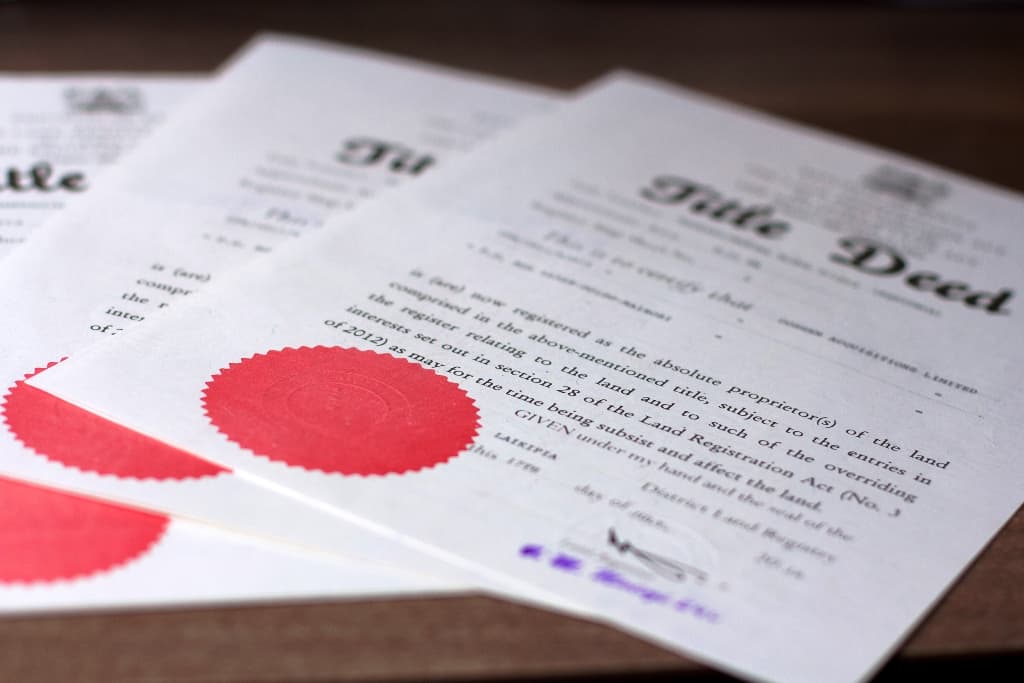
How to Get a Title Deed in Kenya: Costs, Timelines and What to Do If It's Lost
A lost title deed in Kenya costs about KES 1,000 to replace but takes at least 60 days by law. Here's what a first or inherited title deed costs too.
1 Nov 2026 · 8 min read

KRA Housing Levy Enforcement: What Happens If You Have Arrears
KRA's Finance Act 2026 powers let it freeze accounts over unpaid housing levy, but a viral warning graphic was fake. Here is what is real and how to check.
25 Oct 2026 · 8 min read