Tanzania's Mandatory Electronic Payments Order: Which Payments Must Go Cashless
From 31 December 2026, nine kinds of payment in Tanzania, like school fees, hotels and land, must be electronic. Cash stays legal for everything else.

In this guide▾
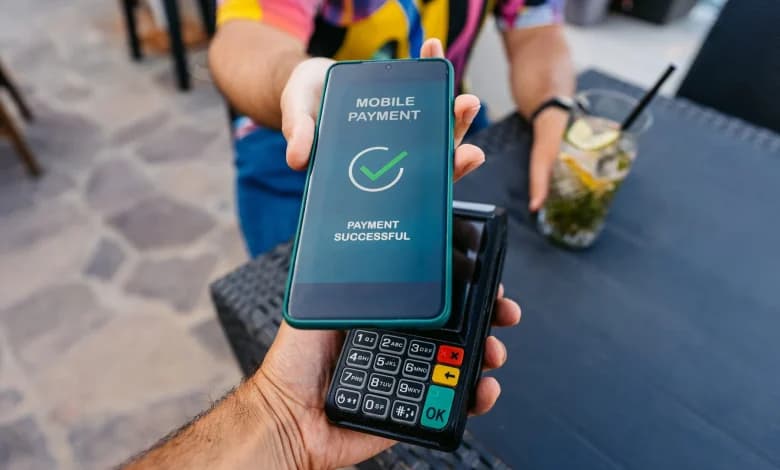
If you take payments in Tanzania for certain services, you must now offer an electronic option, like mobile money, a bank transfer or a card. You have until 31 December 2026 to set it up.
The rule covers nine types of transaction. It doesn't ban cash, and everyday shopping outside those nine can still be paid in cash. Here's the list, and what it means for you, as of October 2026.
If you run a shop in a mall, a guesthouse, a filling station, a school, a transport business, or you're buying or renting land, this affects you directly. Here's what Government Notice No. 158C says, who it catches, and how to get compliant before the deadline.
What Government Notice No. 158C requires
| Order | Electronic Transactions (Mandatory Electronic Payments for Specified Transactions) Order, 2026 |
| Legal basis | Section 13(2), Electronic Transactions Act (Cap. 442) |
| Published | 30 June 2026 |
| In force | 1 July 2026 |
| Compliance deadline | 31 December 2026 (six months from commencement) |
| Signed by | Khamis Mussa Omar, Minister for Finance |
The Order itself is short. Section 2(1) says anyone who makes or receives payment for a transaction on its Schedule must do so "through an electronic means", so the duty is on both the customer and the business, not just the one collecting the money. Section 3(1) gives anyone already taking payments for a listed transaction six months from 1 July 2026 to set up electronic payment, which means by 31 December 2026. Section 3(2) says the Order doesn't affect contracts or arrangements made before 1 July 2026 (Government Notice No. 158C, 30 June 2026).
Law firm Bowmans notes that lawyers are still debating how far that contract exemption goes: whether payments still due under an older lease or sale agreement must switch to electronic means, or whether the whole contract is exempt. If you have a long-running agreement from before July 2026, get specific advice rather than assuming either way (Bowmans, Tanzania mandates electronic payments for specified transactions).
Which transactions are covered
The Order's Schedule lists nine categories. If your business sits in any of these, the deadline applies to you:
| Category | Covers |
|---|---|
| Transport and parking | Fees, charges, levies, tolls or fares for bus rapid transit (BRT/Dart), ferries, bridges, long-distance passenger buses, online taxis, air transport, rail transport and parking |
| Retail and leisure venues | Goods or services at shopping malls, gyms, cinemas, conference and event venues, sports arenas, and trade exhibitions such as Saba Saba and Nane Nane |
| Fuel | Payments at filling stations |
| Education | Fees and contributions at pre-primary, primary and secondary schools, and tertiary institutions and universities |
| Hospitality | Accommodation, food and beverages at hotels, restaurants and cafes |
| Tourism | Tourism-related services |
| Property | Renting, sale or purchase of a building, plot or farm |
| Vehicles | Sale or purchase of a motor vehicle |
| Agriculture | Payments through cooperative unions and AMCOS for strategic crops (cotton, cashew nuts, coffee, tea, sisal, tobacco) and agricultural inputs and pesticides |
(Source: Government Notice No. 158C Schedule.)
Outside these nine categories (your local mama ntilie, a kiosk, a boda boda fare, a market stall) the Order doesn't apply, and cash is still perfectly legal.
Is Tanzania banning cash?
No. One Tanzanian legal update ran the headline "Cash Payments Banned," but that overstates what the Order does. Global Law Experts, reviewing the same text, is explicit: the Order "does not abolish cash," doesn't make cash illegal, and doesn't touch the Tanzanian shilling's status as legal tender. Cash remains usable for the vast majority of everyday transactions that fall outside the nine listed categories (Global Law Experts, Mandatory Electronic Payments in Tanzania).
What has changed is narrower but still significant for business owners in the nine sectors above: for those specific payments, cash alone will no longer satisfy the law once the transition period ends on 31 December 2026.
What counts as an "electronic means" under the Order
Section 2(2) defines it broadly. Any of these qualifies:
- Mobile money (M-Pesa, Tigo Pesa, Airtel Money, HaloPesa)
- Bank transfer
- Electronic funds transfer (EFT)
- Payment card (debit or credit, via POS)
- Electronic wallet
- Point of sale (POS) device
- Internet or mobile banking
- Government electronic payment system
You don't need all of these. One reliable option is enough to comply, as long as your customers can use it.
How to get your business ready before 31 December
- Check whether the rule covers you. Compare what you sell with the Schedule above. A hotel, a school, a car dealer, a filling station and an events venue are all clearly covered. A general shop usually isn't, unless it's inside a shopping mall.
- Pick at least one electronic channel. For most small businesses, the quickest route is a mobile money merchant or "lipa namba" number with your network (Vodacom's M-Pesa, Tigo Pesa or Airtel Money) alongside, or instead of, a bank POS machine. Contact your provider directly for the current sign-up requirements and charges, since these change often; our Tanzania mobile money charges calculator and M-Pesa Tanzania's 2026 charges are a good starting point before you commit a customer to a particular method.
- Get your TRA TIN sorted first. Banks and mobile money providers will ask for your Taxpayer Identification Number to open a business or merchant account. If you don't have one yet, or aren't sure of your status, see how to check or generate your TRA TIN.
- Formalise if you haven't already. A merchant account is easier to open with a registered business name or company. If you're still operating informally, registering with BRELA is the first step.
- Update your paperwork. If you take deposits or sign agreements for property, vehicles or long stays, make sure the payment clause doesn't assume cash only.
- Tell your customers. Put up a sign or a line on your receipt saying which electronic options you accept, so customers aren't caught out at the till.
- Keep proof. Hold on to transaction records or statements, so you can show the payment went through an accepted channel if there's ever a dispute.
Bowmans' advice points the same way: start onboarding with your bank or mobile money provider now rather than in December, since queues and verification can take longer than expected closer to the deadline (Bowmans).
If you're buying, selling or renting property, land and vehicle registries are expected to start asking for proof of electronic payment on these deals. Cash-only property deals risk delays from 1 July 2026, so check the current requirements with the registry or a lawyer before you sign anything (Global Law Experts).
What happens if you don't comply
As of October 2026, the Order itself sets no specific fine or penalty for not complying, and none of the legal commentaries on it (Bowmans, EY, Afriwise or Global Law Experts) mention one either (Afriwise, Electronic Payments Mandated for Specified Transactions). That doesn't mean nothing will happen. Regulators in the affected sectors (land registries, vehicle registration, education) can still add checks for proof of electronic payment to their own processes, as Global Law Experts points out for property transfers. Don't wait for a published fine. Treat the 31 December deadline as real.
Mistakes to avoid
- Don't assume your whole business is exempt because one part isn't covered. A hotel's restaurant bill, room charge and tour booking can each fall under different lines of the Schedule (hospitality, tourism), and all of them need an electronic option.
- Don't rely on a single channel that's often down. If your only option is one mobile network's service and its systems are offline, you still need a fallback (a second network, a bank transfer option, or a POS machine) so you're not stuck turning away paying customers.
- Who pays the transaction fee is still an open question. The Order doesn't say, and none of the legal commentaries resolve it either. Decide this with customers upfront (absorb it, or pass it on clearly) rather than arguing about it at the till.
- Old contracts aren't automatically safe. If you're partway through a multi-year lease or instalment sale signed before July 2026, don't assume every future payment is exempt. Get advice if the amounts are large.
Frequently asked questions
Has Tanzania banned cash payments?
No. Government Notice No. 158C only requires electronic payment for nine listed categories, such as school fees, hotels, land and vehicle sales, and transport fares. Cash is still legal tender, and you can still use it for everyday purchases outside those categories.
When do businesses have to start accepting electronic payment?
The Order came into force on 1 July 2026. Anyone already receiving payments for a listed transaction has six months from that date, until 31 December 2026, to put an electronic payment option in place.
What counts as an electronic payment under the Order?
Mobile money, bank transfer, electronic funds transfer, payment card, electronic wallet, POS device, internet or mobile banking, and the government's own electronic payment system all qualify. You only need one working option, not all of them.
Do school fees have to be paid electronically in Tanzania now?
Yes. Fees and contributions for pre-primary, primary, secondary and tertiary education are explicitly listed in the Order's Schedule, so schools and institutions need an electronic payment channel in place by 31 December 2026.
Does the Order apply to a lease I signed before July 2026?
The Order says it doesn't affect arrangements or contracts made before 1 July 2026, but legal commentators note it's unclear whether that exemption covers ongoing instalments under those older contracts. If the amounts involved are significant, get specific legal advice rather than assume either way.
What happens if my business doesn't comply by 31 December 2026?
The Order itself doesn't set out a fine, and no penalty has been reported by the law firms tracking it as of this writing. But sectors like land and vehicle registration are expected to start checking for proof of electronic payment on their own, so non-compliance can still cost you in delays even without a formal fine.
Keep reading

Mixx by Yas Charges: Sending, Withdrawal and Transaction Fees in Tanzania
Mixx by Yas (ex-Tigo Pesa) charges TZS 30 to send TZS 1,000 to another wallet, but TZS 310 to withdraw it in cash. See the full 2026 tariff table for Tanzania.
8 Nov 2026 · 5 min read

Airtel Money Tanzania: Registration, Charges and How to Reverse a Mistake
How to register for Airtel Money in Tanzania, what the government e-money levy adds to a transaction, and the real way to reverse a wrong payment.
8 Nov 2026 · 5 min read
NIDA Number Check in Tanzania: The 3 Official Ways to Verify Your ID
Check your NIDA number in Tanzania for free with Fahamu NIN, Fuatilia Ombi or your district office. There is no official app or USSD code.
15 Oct 2026 · 8 min read