Cost of Building a 3-Bedroom House in Ghana
A mid-market 3-bedroom house costs GH₵500,000-720,000 to build in Ghana in 2026, excluding land - the real cost in Accra, Kumasi and beyond.

In this guide▾
- How much a 3-bedroom house costs, by tier
- Accra vs Kumasi vs everywhere else
- Where the money goes
- Labour day rates in Ghana right now
- What land will add to the bill
- Building permits: what they cost and how long they take
- How long it takes
- Storey house or single-storey bungalow?
- Financing it without a mortgage
- Building mistakes that blow your budget
- Frequently asked questions
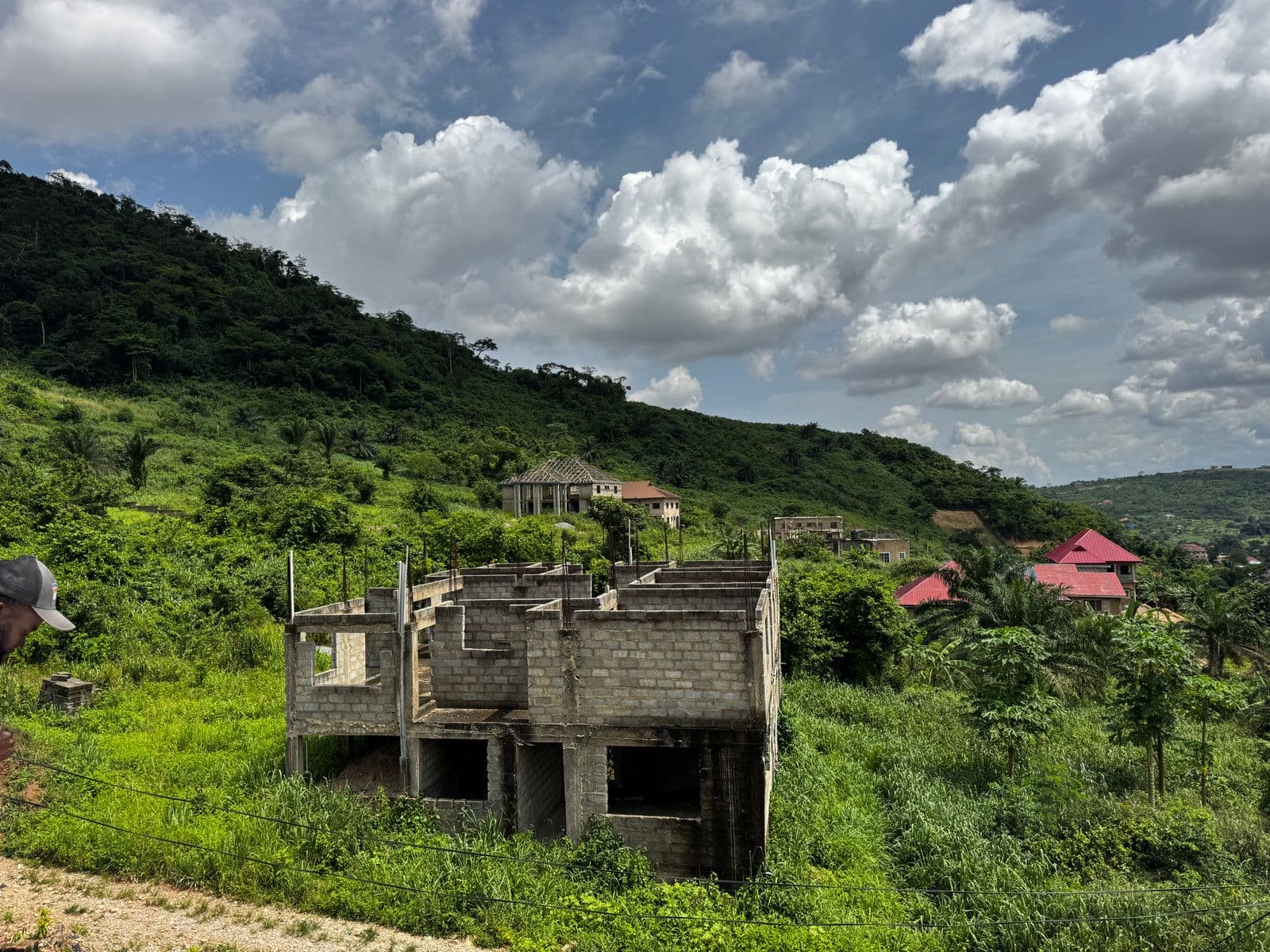
Where you build in Ghana changes the bill a lot. A mid-range three-bedroom house in Greater Accra costs roughly GH₵500,000 to GH₵720,000 to build in 2026, before land, and the same house in Kumasi, Takoradi or Tamale usually costs 15–25% less.
A premium finish or a second storey can push it past GH₵1 million. These estimates come from Ghanaian construction-cost sources, checked October 2026. Always get a quantity surveyor's quote for your own plot and plans.
How much a 3-bedroom house costs, by tier
| Tier | Size | Total cost (excl. land) | Cost per sqm (Accra) |
|---|---|---|---|
| Budget | 85–100 sqm (2-bed) | GH₵320,000–480,000 | GH₵3,200–4,500 |
| Mid-market | 120–150 sqm (3-bed) | GH₵500,000–720,000 | GH₵4,200–5,500 |
| Premium | 150–200 sqm (3-bed) | GH₵720,000–980,000+ | GH₵5,500–7,500 |
These figures come from Ownkey's Q2 2026 Ghana construction cost data, cross-checked against a separate Ownkey build-cost index that puts basic builds at GH₵2,600–3,200/sqm, standard at GH₵3,800–4,800/sqm and premium at GH₵5,500–7,200/sqm (Ownkey cost guide, Ownkey build-cost index). The two don't match exactly (construction cost data in Ghana isn't standardised the way, say, KRA tax bands are) so treat any figure as a planning range, not a quote.
A worked example: a 140 sqm mid-market house at GH₵5,000/sqm (the middle of the Accra mid-market range) comes to GH₵700,000, plus the 15% contingency every source recommends (GH₵105,000), for roughly GH₵805,000 all in, before land. Push the finish up to premium and that same floor area can pass GH₵1 million.
Accra vs Kumasi vs everywhere else
Building in Greater Accra costs more than anywhere else in Ghana, mainly because materials, transport and skilled labour all cost more close to the capital.
- Greater Accra: budget GH₵3,200–4,500/sqm, mid-market GH₵4,200–5,500/sqm, premium GH₵5,500–7,500/sqm.
- Kumasi and other secondary cities (Takoradi, Tamale, Cape Coast): budget GH₵2,500–3,500/sqm, or GH₵3,200–4,200/sqm for mid-market. That's roughly 15–25% cheaper than Accra (Ownkey cost guide).
Daily labour rates in Kumasi, Takoradi, Tamale and Cape Coast run about 15–25% below Accra rates too, so the saving compounds: cheaper materials delivery, cheaper tradesmen, and usually cheaper land (more on that below).
Where the money goes
Materials make up roughly 55–65% of a build, labour the remaining 25–35%. Here's what things cost in Greater Accra as of mid-2026:
| Material | Price | Unit |
|---|---|---|
| Cement | GH₵70–85 | per 50kg bag |
| Sandcrete block (6-inch) | GH₵3.50–5.50 | each |
| Steel rebar (10mm, 12m bar) | GH₵70–95 | per bar |
| Steel rebar (12mm, 12m bar) | GH₵100–130 | per bar |
| Sand | GH₵400–700 | per tipper load |
| Gravel/chippings | GH₵600–900 | per tipper load |
| Aluminium roofing sheet (0.55mm, 3m) | GH₵130–280 | per sheet (standard–long-span) |
| Timber (2"x4", 3.6m) | GH₵65–95 | per piece |
These are Q2 2026 Greater Accra prices, and they match across two separate cost breakdowns from the same source (Ownkey cost guide, Ownkey build-cost index). Check with your own supplier before you order a full load, because prices move with the cedi and fuel costs, and the official index below shows they're still rising. Shop prices already include VAT, which changed on 1 January 2026: the real rate fell from about 21.9% to a flat 20% once GRA stopped charging VAT on top of NHIL and GETFund.
The official figures agree. Ghana Statistical Service data (reported by MyJoyOnline) put the Prime Building Cost Index at 138.3 in July 2026, up 4.0% on a year earlier, with materials up 5.1% and plant and equipment costs up a sharp 18% (MyJoyOnline, GSS data). Building isn't getting cheaper, so expect prices to have moved by the time you start.
Labour day rates in Ghana right now
| Tradesperson | Accra day rate |
|---|---|
| Mason/blocklayer | GH₵180–280 |
| Carpenter | GH₵200–320 |
| Electrician | GH₵220–350 |
| Plumber | GH₵200–320 |
| Steel fixer | GH₵180–260 |
| Tiler | GH₵150–250 + GH₵15–25/m² laying fee |
| Painter | GH₵120–200 |
| Unskilled labourer | GH₵90–140 |
| Site foreman | GH₵2,500–4,500/month |
(Ownkey cost guide.) Many builders agree a price for the whole job instead of a daily rate. For a 3-bedroom house, a mason's full shell usually costs GH₵25,000–40,000, full electrical wiring GH₵20,000–40,000, and full plumbing GH₵15,000–28,000. Either way, get at least two or three quotes. Tradesmen price Accra jobs differently depending on how much they think you'll negotiate.
What land will add to the bill
Every figure above excludes land, and land is often the bigger line item. Prices vary enormously by corridor:
Greater Accra (quarter-acre plots, Q2 2026):
| Corridor | Price range |
|---|---|
| Oyibi–Abokobi (inner) | GH₵180,000–350,000 |
| Pokuase–Ofankor–Amasaman | GH₵120,000–380,000 |
| Ningo–Prampram (coastal) | GH₵120,000–250,000 |
| Dodowa (Eastern Accra) | GH₵100,000–220,000 |
Kumasi (500 sqm plot, Q2 2026): GH₵60,000–180,000–45–60% cheaper than a comparable Adenta or Pokuase plot in Accra, which runs GH₵150,000–350,000 for the same size. Peri-urban land around Ejisu starts from about GH₵40,000 (Ownkey Kumasi guide).
Add land title registration at the Lands Commission, which costs roughly GH₵5,000–15,000 depending on the plot (Ownkey cost guide). Don't skip this: about 90% of land transactions in Ghana still involve unregistered or poorly documented titles, and that's where most building disputes start. Verify ownership at the Lands Commission before you pay a cedi for a plot, not after.
Building permits: what they cost and how long they take
You need a permit from your Metropolitan, Municipal or District Assembly (MMDA) before you lay a single block legally. For a standard residential build in Greater Accra, the application fee runs roughly GH₵2,000 for a small structure up to GH₵20,000+ for a large multi-unit development, calculated from the floor area, your declared construction cost and the land-use category (Ownkey permit guide). Fees are set by the individual Assembly and revised periodically, so confirm the current schedule with yours before budgeting.
Processing takes 60–120 days for a complete application, or around 45–80 days if an experienced GIA-registered architect handles the drawings. You'll need the application form, at least three sets of GIA-approved architectural drawings, signed structural engineer's drawings, a site plan, your land title or Lands Commission letter, and a property rate clearance from the Assembly. Apply before you start digging. The permit must be displayed at the site throughout the build, and building without one can get the structure flagged or demolished.
How long it takes
Most single-storey 3-bedroom builds in Ghana take 6 to 18 months from groundbreaking to move-in, depending on how steadily you can pay. A cash build with materials bought in bulk moves faster than one built in stages as money comes in. Roughly, by stage:
- Site prep and layout: 1–2 weeks
- Foundation: 2–4 weeks
- Block-work and structure: 6–12 weeks
- Roofing: 2–4 weeks
- Plastering and screeding: 3–6 weeks
- Tiling: 2–4 weeks
- Electrical and plumbing: 2–3 weeks each (often run together)
- Painting and finishing: 2–3 weeks
(Ownkey construction timeline guide.) That's on top of the 60–120 days you'll likely spend waiting on your permit, which most people run in parallel with site prep and foundation work rather than waiting for it to clear first.
Storey house or single-storey bungalow?
A two-storey 3-bedroom house costs noticeably more than the single-storey figure above, commonly GH₵700,000 to GH₵1.3 million or more before land, because of the extra steel, a staircase and a stronger foundation for the upper floor (Yen.com.gh, 3-bedroom storey house, 2026). A rough breakdown for a storey house: foundation GH₵100,000–180,000, structure and upper floor GH₵200,000–350,000, roofing GH₵60,000–120,000, doors and windows GH₵60,000–110,000, plumbing and electrical GH₵60,000–120,000, and tiling, painting and finishing GH₵150,000–300,000.
Building upwards makes sense when your plot is small or land is expensive: you get the same floor space on a smaller, cheaper piece of land. Where land is cheap, a bungalow on a bigger plot is almost always the cheaper way to get three bedrooms.
Financing it without a mortgage
Most people building in Ghana fund it in cash, in phases, rather than borrowing. If you're saving the deposit or the next phase's materials budget before you break ground, a current account loses to anything that pays interest while you wait:
- Short-term government securities like Treasury bills suit money you'll need within the next 3–12 months, such as the next roofing or finishing stage.
- Government bonds suit money you won't touch for a year or more, such as a land fund you're building toward.
- Run the numbers on either with our compound interest calculator to see what a fixed monthly contribution grows into over the time you've got before you need it.
If you're salaried and working out how much you can set aside each month, start from your take-home pay after PAYE and SSNIT. Budgeting from your gross salary instead of what you take home is one of the most common reasons a build stalls halfway.
Building mistakes that blow your budget
- No written contract or bill of quantities. Verbal agreements with a mason or contractor are where cost overruns and disappearing tradesmen happen. Get a signed scope of work and payment schedule before any money changes hands.
- Skipping the quantity surveyor. A proper QS estimate for your specific drawings costs far less than the money an inaccurate self-estimate can cost you in materials wasted or underbudgeted labour.
- Buying all your materials at the start. Cement, steel and timber prices move: the materials part of Ghana's building cost index rose 5.1% in the year to July 2026. Buying materials just before each stage, rather than all at once, protects you from a bad month of price rises (and from theft on an unguarded site).
- Building on unregistered or disputed land. Verify the title at the Lands Commission and get an independent search done. Don't rely on the seller's word, and don't treat a permit-fee receipt as proof that you have a permit.
- No contingency. Every cost guide we looked at recommends adding 15–20% to your estimate. Treat that as the minimum: plant and equipment costs alone rose 18% in the year to July 2026.
Haven't bought the plot yet? See how to buy land in Ghana safely.
Frequently asked questions
How much does it cost to build a 3-bedroom house in Ghana?
A mid-market 3-bedroom house (120–150 sqm, single storey) costs roughly GH₵500,000–720,000 to build in Greater Accra as of 2026, excluding land. A premium finish on the same size runs GH₵720,000–980,000+, and the same house in Kumasi or another secondary city typically costs 15–25% less.
Is it cheaper to build in Kumasi than in Accra?
Yes. Materials, labour and land all cost less outside Greater Accra. Construction per square metre in Kumasi and similar cities runs about 15–25% below Accra rates, and a comparable 500 sqm residential plot in Kumasi (GH₵60,000–180,000) can cost 45–60% less than the same size plot in an Accra corridor like Adenta or Pokuase.
How much extra should I budget for land?
It depends entirely on location. A quarter-acre plot in the Greater Accra corridors covered here ranges from about GH₵100,000 in Dodowa to GH₵380,000 closer to Pokuase-Ofankor, while Kumasi plots start from roughly GH₵60,000. Add GH₵5,000–15,000 for Lands Commission title registration, and budget time and money for an independent title search before you pay for the plot.
How long does it take to build a 3-bedroom house in Ghana?
Most single-storey builds take 6–18 months from groundbreaking to move-in, not counting the 60–120 days a building permit usually takes to clear. A cash build funded upfront moves toward the faster end; a pay-as-you-go build stretched over your salary moves toward the slower end.
Do I need a building permit, and what does it cost?
Yes. Building without one risks the structure being flagged or demolished. For a standard house in Greater Accra, expect to pay roughly GH₵2,000 for a small house, up to GH₵20,000 or more for a large development, based on floor area and declared building cost. Confirm the exact fee with your Metropolitan, Municipal or District Assembly, because the rates are revised from time to time.
Is it cheaper to build a bungalow or a two-storey house?
For the same floor area, a single-storey bungalow is usually cheaper because it needs a lighter foundation and no staircase or extra structural steel. A storey house only makes financial sense when land is small or expensive relative to the extra structural cost of building up instead of out.
Keep reading

Best Mutual Funds in Ghana: Real Returns and How to Start From GH₵50
A full comparison of Ghana's biggest unit trusts and mutual funds: real September 2026 returns, fees and minimums, plus how to start investing from GH₵50.
30 Oct 2026 · 9 min read
How to Buy Treasury Bills in Ghana: Banks, Mobile Money and What They Pay Now
You can buy Ghana Treasury bills from GH₵5 on Ecobank's mobile money service, and the interest is tax-free. See October 2026 rates and how to buy.
11 Oct 2026 · 10 min read
Government Bonds in Ghana After the Restructuring: How to Invest
Ghana's bond market has reopened after the 2023 debt exchange. Here's how to invest in 2026, current T-bill and bond rates, and the risks to know.
18 Sept 2025 · 8 min read